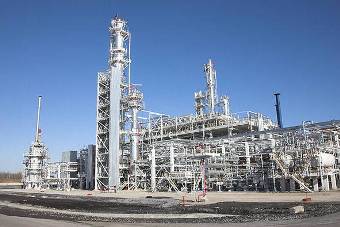
Here i am trying to explaining about the role of Opercom® in oil and gas commission activity
1. What is OPERCOM® ?
Opercom® is a test methodology tailored to Oil & Gas production and treatment, installations, which has been providing its worth for more than twenty years now. Opercom® is for Commissioning specialists. The methodology is used by the dedicated teams responsible for preparation during the engineering phase and for execution at the end of the project. Opercom® training modules are available for future users. Total has signed agreements with training organizations for providing them.
Q: How long is the course?
A: One week.
Opercom® is used in the Pre-commissioning and Commissioning phases, before handover to operations. It is a tool that ceases to be used at the end of the project. The Opercom® methodology can also be used to test exhaustively any modifications, executed on an existing installation. An installation tested down to the smallest detail will be operational faster and more safely with the Opercom® methodology!
2. What is Pre-Commissioning Phase ?(Issuing RFC after completion)
The Pre-commissioning phase includes three main types of activities:
Conformity checks.
Static/de-energized tests.
Piping tests.
On completion of these tests, an “RFC” (Ready For Commissioning certificate) is issued for each Sub-system. A Sub-system is Ready For Commissioning when ALL Pre-Commissioning operations on that Sub-system are completed and there is NO outstanding punch item category A
We can then simply summarize in following:
CONSTRUCTION + PRE-COMMISSIONING = Ready For Commissioning
3. What is Commissioning?(Issuing AOC after completion)
Commissioning is a major activity in a project: it is the final quality check before transfer to the start-up team. It is also the key to ensure a smooth and quick ramp up to the production plateau as planned.
Commissioning engineering should start early in the project with some input already during Basic Engineering and during the Call For Tender preparation. The Commissioning competencies of the selected EPCC contractor, and of its specialized sub-contractor are crucial and must be combined with a mobilization plan well suited to both the contractor and the company. Feedback at the end of the project is essential to help us improve our knowledge and our technical standards.
The Commissioning phase essentially comprises three types of tasks:
Dynamic verification.
Testing with substitute fluids,
The preparation of the piping and vessels for start-up.
We can say:
Commissioning -> Dynamic & Energized
On completion of these tests, an “AOC” (Achievement Of Commissioning) certificate is issued for each Sub-system. A Sub-system is ready for Achievement Of Commissioning when ALL Commissioning operations on that sub-system is completed and there is NO outstanding punch item category B. There is then a transfer between the Commissioning entity and the Operations entity.
And AOC is Visa for each Sub-system to be transferred from Commissioning to Operation phase
4. What is punch list?
Items that have not successfully passed the tests are listed in a punch list. They are managed in accordance with certain priorities (A, B, C) such that items ranked priority ”A” are to be cleared before the RFC can be signed.
Here is summarizing information about punch list categories